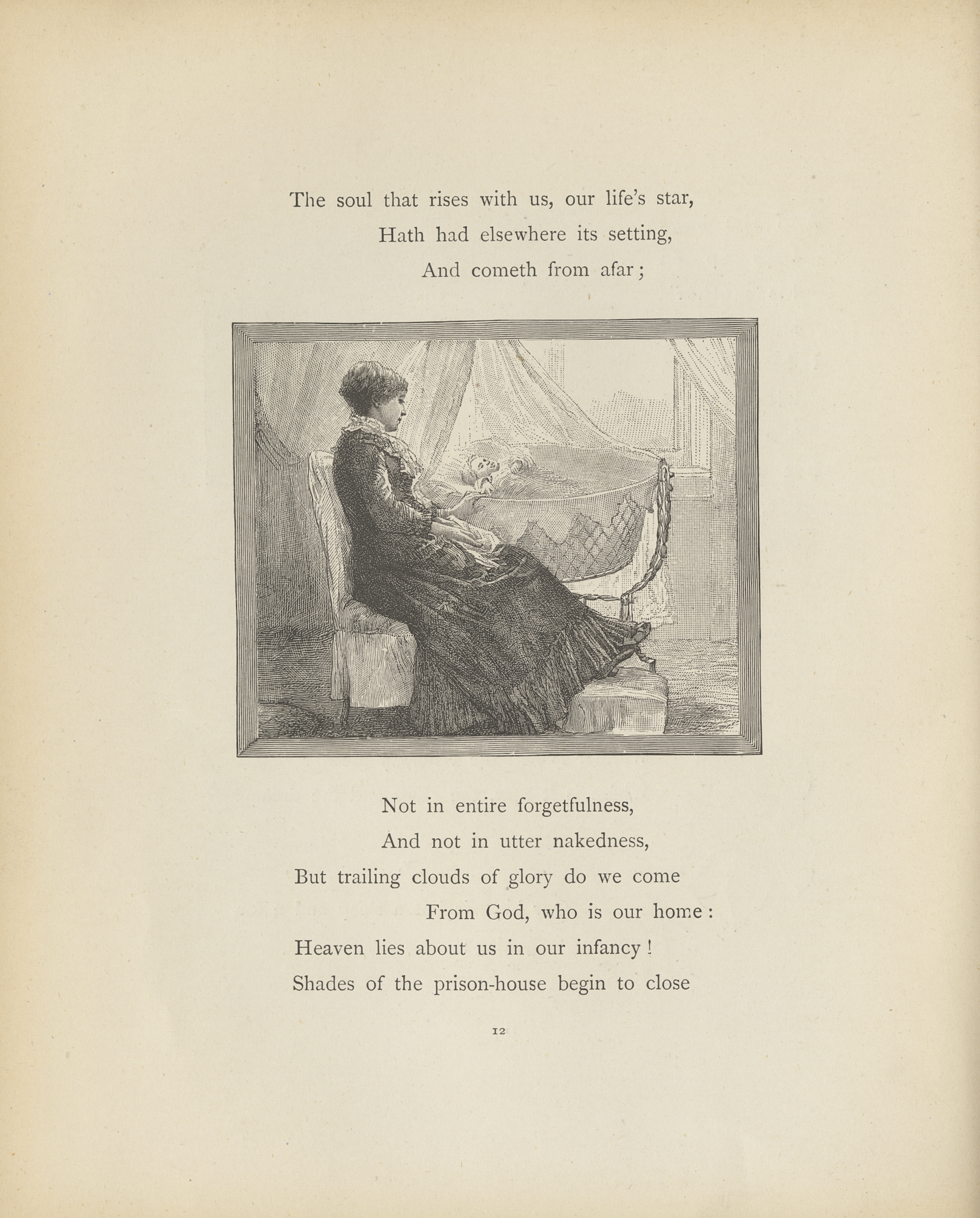
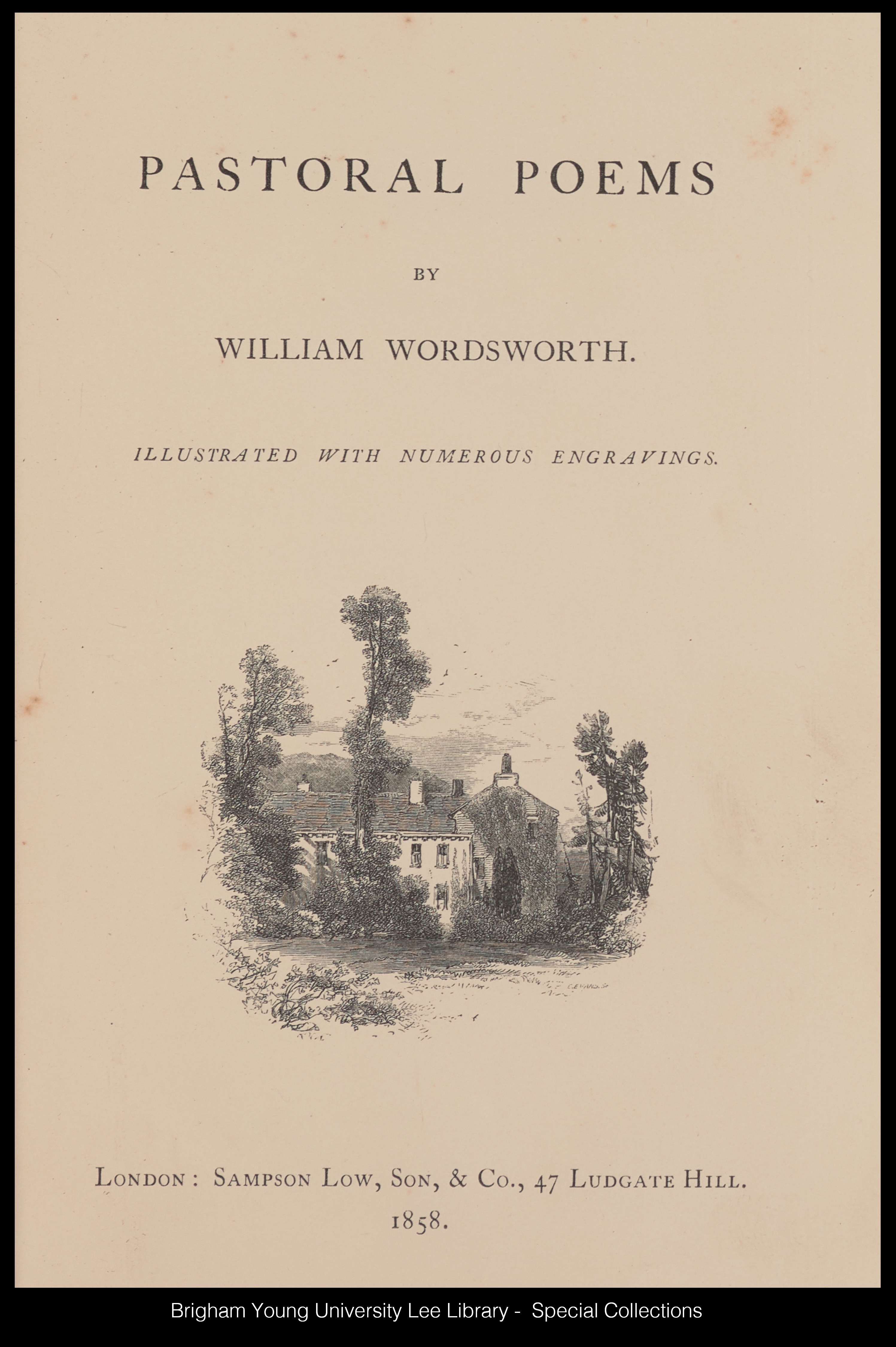
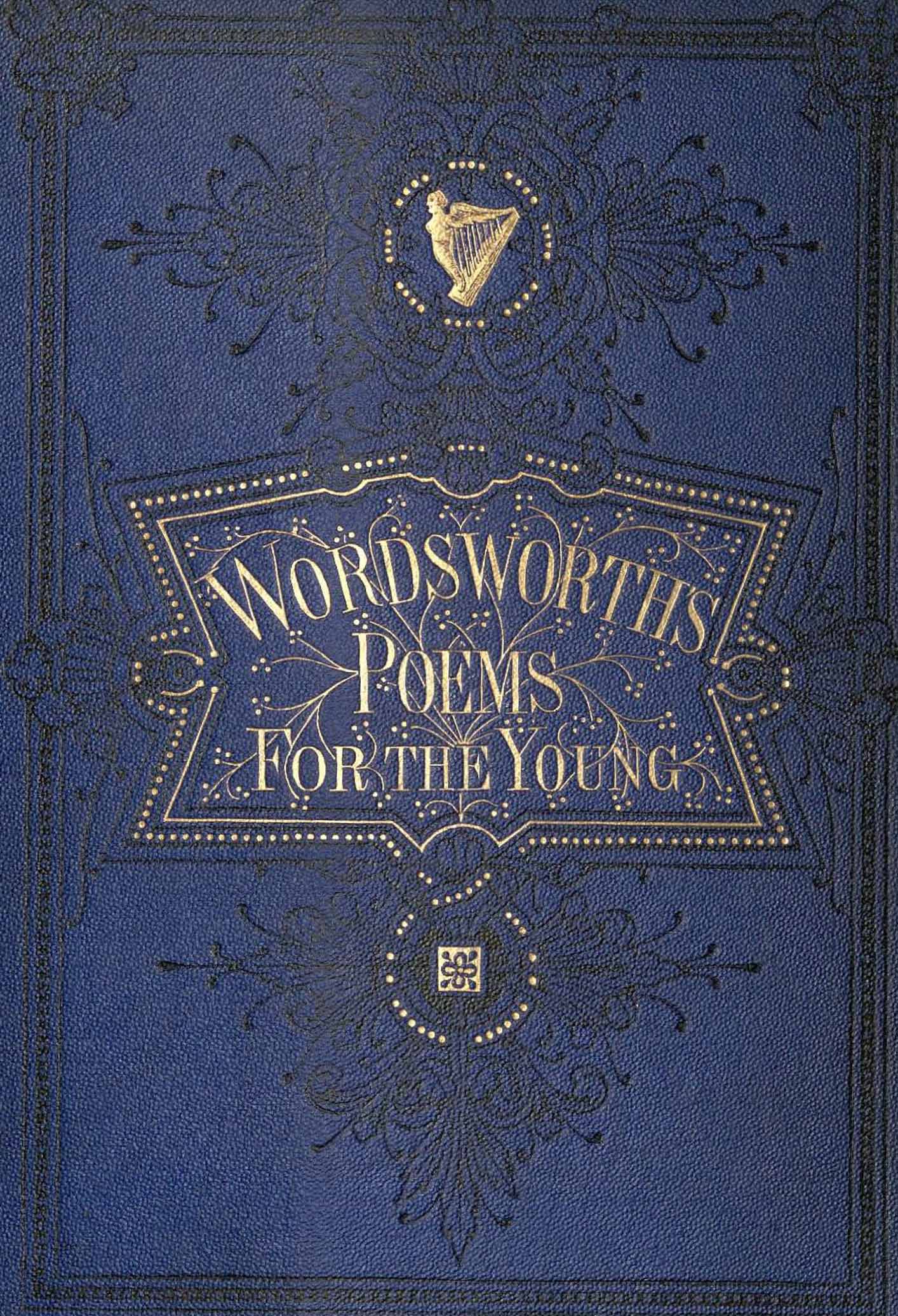
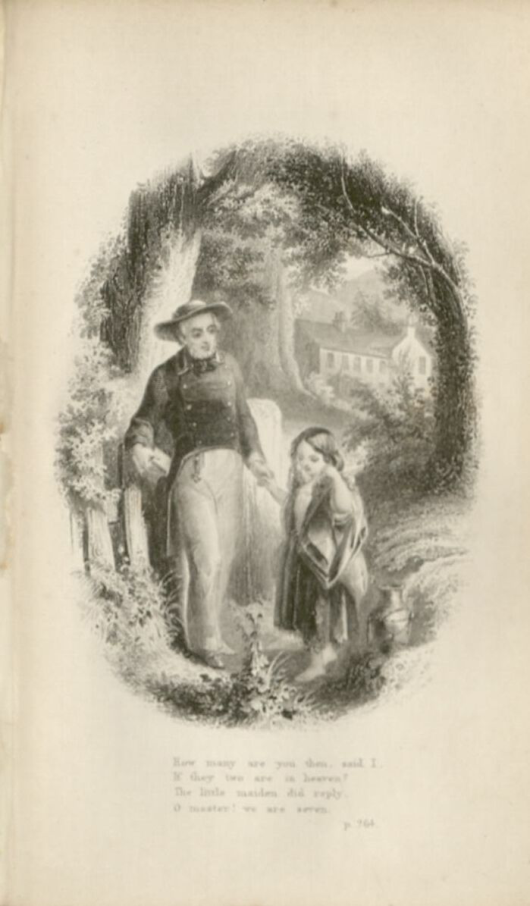
With the rise of industrialization in the Victorian era, Wordsworth’s work was often interpreted as a natural escape from the oppressive urban life. As new printing technology allowed for engravings to (affordably) accompany text, his poetry was published alongside stunning landscapes and rural scenes, many featuring cherubic children enshrouded in nature’s embrace. In this way, Wordsworth was remembered for a particular subset of his body of work, sometimes to the detriment of his other writings, for instance his depictions of difficult pastoral life or his reflections on contemporary politics. This idealized interpretation of the poet produced an image of him that seemed ideologically safer for common readers, and particularly for children. Inspiration via nature seemed healthy, uncomplicated, and uplifting. An idyllic Wordsworth was especially desirable in the face of modernity, because even without openly criticizing the Industrial Revolution’s newly developing lifestyles and social structures, his work could tap into a longing for simpler times.
This display case assembled by Abigail Clayton, Thomas Sorensen, and Tiffiny Smart.